Thursday, October 25, 2007

Toxins in my shampoo? What is the world coming to?


For our First Year Seminar Class, Christine Smith sent us to two sites to look for products we use every day, and to see if they contain harmful toxins and if they meet certain standards, are tested to lead to cancer, etc. The site http://www.ewg.org/ was much more helpful and easier to understand than http://www.thegreenguide.com/, so most of my research is based on ewg.org.


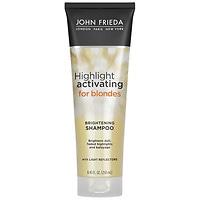
The first product I looked up was my shampoo--Pantene Pro-V's John Frieda Collection--Sheer Blonde Highlight Activating Shampoo. I learned that my shampoo is connected with cancer, allergies, skin irritation, and organ system toxicity, among many others. They also have violated many restrictions, and are not a signer with Compact for Safe Cosmetics. The Toxin level is at 5, which is considered moderate. However, now that I know that this product is associated with many health concerns, I will not be using this product. I have enough health concerns (many of which could be connected to this product) and I would rather not add to them. I would also like to use a product that takes a strong sense against animal testing, and since this product isn't labelled either way, I'd rather not risk it. Honestly, what is the world coming to if I can't even wash my hair without going through the danger of exposing myself to cancer-causing chemicals. Seriously, don't these products have to be labelled or something?


The second product I researched was the Dove Beauty Bar--Sensitive Skin. This product had a toxin level of 3, which is very low. There is no connection between this product and cancer, and this product doesn't violate any restrictions, which is always good. However, this product is still connected to allergies and skin irriations, but nothing too serious. The only real downside to this product is that it tests on animals. However, I don't believe that I will be changing my soap anytime soon because of the differences of cost between this product and soaps of a lower concern. Most of the other products that I could use that would be better for me are twice as expensive and are not sold at the average convenience store.


Through this research I learned a lot more about being a responsible consumer. I have already had better skin reactions since I stopped using my Sheer Blonde shampoo. I am very grateful for this assignment, its leading to a healthier lifestyle already.

Sunday, October 7, 2007

Field Trip!!


On Thursday, October 4th, The First Year Seminar: Local Choices, Global Effects went on a field trip to the Nature Museum located in Chicago. The focus of this museum is primarily education. Since many of its audience do not have a PhD in ecology or other nature related degrees, the museum itself is very simple and easily understood. The museum itself has many sections: the wetlands, the river systems, the butterfly exhibit, the wilderness walk, the going green area (complete with a under seven children’s section), a green rooftop, a reptile exhibit (not open until later this month), and a gift shop.’
My favorite exhibits were the wetlands and river systems. These two exhibits (situated next to each other since they are very alike) have three dimensional models full with flashing lights, pouring water, and sound effects. One particular model even has a narrator explaining the model, while lights flash on the area that is currently being explained. These models are full of color and effects that would attract a young child, and yet the content still holds the attention of the adult. Another favorite model of mine is the city irrigation system in which there is a model of a city (with skyscrapers) complete with water canals. Above the city, there is a “cloud” in which rain pours down (after pushing a button) and you get to see which directions the water flows, how fast, etc.
To me, the green area with the kitchen was probably most related to what we were doing in class for the waste management project.. The exhibit shows diagrams of what you should/should not recycle, how to best avoid wasted energy in your kitchen, and the like. However, I do believe that the wetlands/river system exhibit could relate more to what we are doing for this next presentation on sustainable living because it has to do with how our communities are built, how long those communities will last under certain conditions, what is necessary for planning the construction of a community and so on. These two exhibits helped me expand my thoughts on what sustainable living actually means. Before I was focused on food and the growing of plants, but in reality, sustainable living is more than what we put into our bodies, but what we put into our communities, and where we put those communities. It is very logical to think that communities located on what were once marshes and swamps will not last as long as communities built on higher ground, and are thus not as sustainable.
Overall, I enjoyed myself during our time at the Nature Museum. If I were to do it again, I would do everything the same (except maybe take more pictures). Also, I would definitely recommend this museum for the FYS Exploring Chicago class, if they have not already visited.

Monday, October 1, 2007

waste management project essay

Throughout my research on waste management and recycling, I have learned that even the smallest choices do make a difference. For example, if I myself begin recycling regularly, I not only reduce the waste I am producing, but I set an example for those around me. This is clearly shown through the RecycleMania competition. The fact that there is even a competition and convention for schools interested in recycling is not only huge, but it also fires up other schools and encourages them to join the competition and start or improve their school’s recycling program. Another example would be Harvard Law School’s guarantee that all of their e-waste is disposed of within the United States. The fact that it is even possible eliminates any excuses on behalf of any other institutions. So, overall the most important lesson I learned about recycling and waste management is that a small decision goes a long way…and that there are those that are watching us, and following our examples.
This project and presentation taught me a lot about working with a partner and relying on that individual. All throughout high school, I was always paired up with partners that didn’t pull their own weight. This was the first project I was involved in that all the work was shared equally. I had to learn to trust Andrew and give him the space he needed to work comfortably. I was very tempted to take some of his workload on myself so that I could ensure that it was done correctly. My worries were for naught. Andrew did a great job researching his topic and was very well prepared. I believe through this experience I grew as a student and as a person by learning to rely on others to do their part (when their competent) and not stress about it so much.
The presentation really enhanced my knowledge of Elmhurst College. Since my part of the topic wasn’t related to Elmhurst College, I learned about our school’s recycling habits and such on the day of the presentation. It was enlightening to say the least. It was wonderful to hear firsthand how helpful and willing the faculty and staff were to interview with the students. It was also great to have an audience that had power on campus, and was actually engaged what we were saying in the presentation. I hope to experience that for myself during this next project.
This whole past month completely supported my view of what liberal education is. To start off, the project’s subject is something that actually effects us as individuals, as a community, and as global citizens. Then, we’re focusing not only on the big picture, but we’re bringing what we learned back and applying it to Elmhurst College. If that wasn’t enough, our audience consisted of faculty members that held the power to change things in campus…the power to get things done. They were a wonderful engaged audience and seemed to have a genuine interest in what we thought on the subject. All of this is my ideal when I think of a liberal education and has affirmed me in my choice of colleges.
Overall, I really enjoyed this past month of class. I feel that I have learned about myself, my classmates, the environment, and Elmhurst College itself. This project has really convinced me to improve my daily choices to recycle and using environmentally healthy products. I have found myself making a conscious decision to buy recyclable products and purchasing more environmentally-friendly goods—something that I had never thought of before. Overall, the lessons I have learned and the knowledge I have acquired will follow me for years.